Is That Mole Normal? Warning Signs of Skin Cancer You Should Never Ignore
Posted on: July 30th, 2026 by Mittal Team
Most moles are harmless. In fact, it’s completely normal for adults to have anywhere from 10 to 40 moles on their body. But every year, thousands of people are diagnosed with skin cancer after noticing a mole that looked different from the rest.
The challenge is knowing what “different” actually means.
At Mittal Dermatology, we encourage patients to become familiar with their skin and seek evaluation anytime they notice a new or changing spot. Detecting skin cancer early dramatically improves treatment outcomes and can often mean simpler, less invasive care.
Why Monitoring Your Moles Matters
Skin cancer is the most common type of cancer in the United States. Fortunately, it is also one of the most treatable when detected early.
Many skin cancers begin as subtle changes in existing moles or appear as entirely new growths. Because these changes can develop gradually, regular skin self-exams and professional skin examinations are essential for protecting your health.
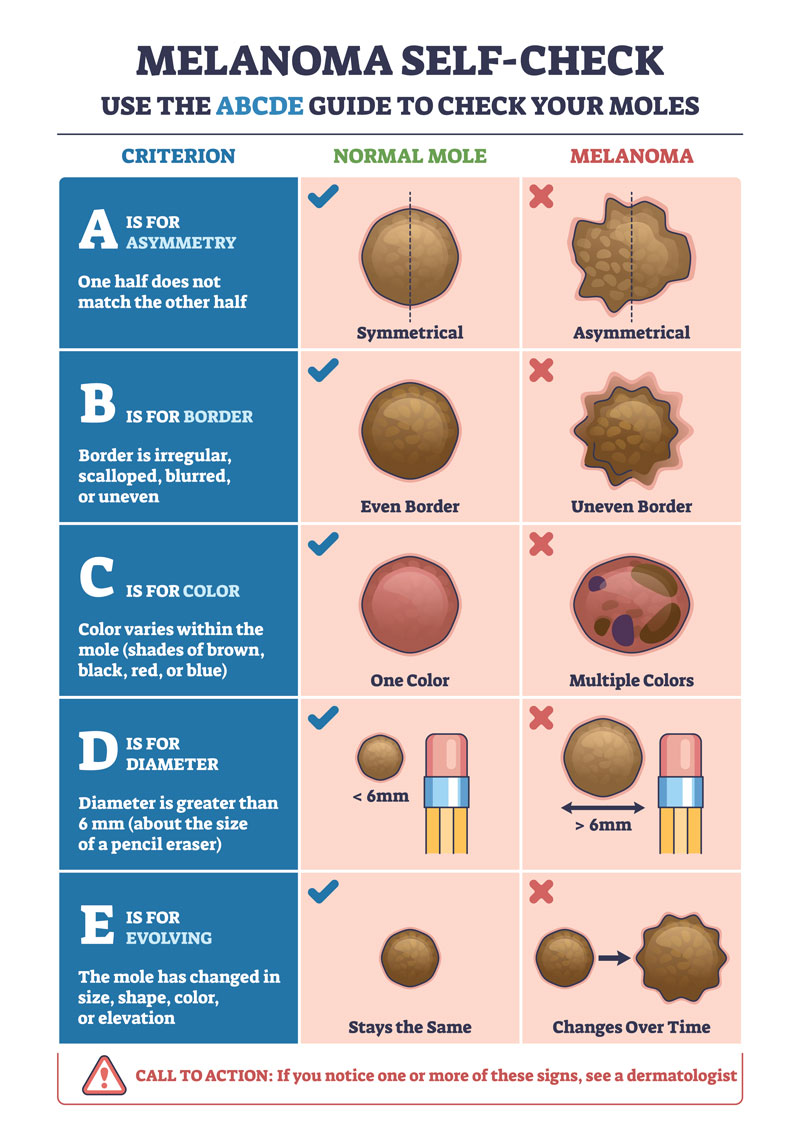
The ABCDE Rule: How to Spot a Suspicious Mole
A – Asymmetry
A healthy mole is usually symmetrical. If one half doesn’t match the other, it deserves attention.
B – Border
Normal moles typically have smooth, even edges. Watch for borders that appear irregular, jagged, blurred, or poorly defined.
C – Color
Most benign moles have a single, consistent color. A mole with multiple shades of brown, black, red, blue, white, or pink may indicate abnormal changes.
D – Diameter
While melanomas are often larger than 6 millimeters (about the size of a pencil eraser), smaller lesions can also be cancerous. Size alone should never determine whether a mole is concerning.
E – Evolving
Perhaps the most important warning sign is change.
If a mole changes in size, shape, color, texture, or begins itching, bleeding, crusting, or becoming painful, schedule an evaluation promptly.
Other Warning Signs You Shouldn’t Ignore
Not every skin cancer follows the ABCDE rule. Contact a dermatologist if you notice:
- A sore that doesn’t heal
- A spot that repeatedly bleeds or scabs
- A rapidly growing bump
- A pink, pearly, or translucent lesion
- A rough, scaly patch that persists
- A dark streak beneath a fingernail or toenail
- Any lesion that simply “looks different” from your other moles
Many patients describe these as the “ugly duckling” spots because they stand out from the rest.
Who Is at Higher Risk for Skin Cancer?
Anyone can develop skin cancer, regardless of age or skin tone. However, your risk increases if you:
- Have fair skin or light-colored eyes
- Spend significant time outdoors
- Have experienced blistering sunburns
- Frequently use tanning beds
- Have numerous moles
- Have a personal or family history of skin cancer
- Have a weakened immune system
- Are over age 50
Even individuals without obvious risk factors should receive routine skin evaluations if they notice concerning changes.
What Happens During a Skin Cancer Screening?
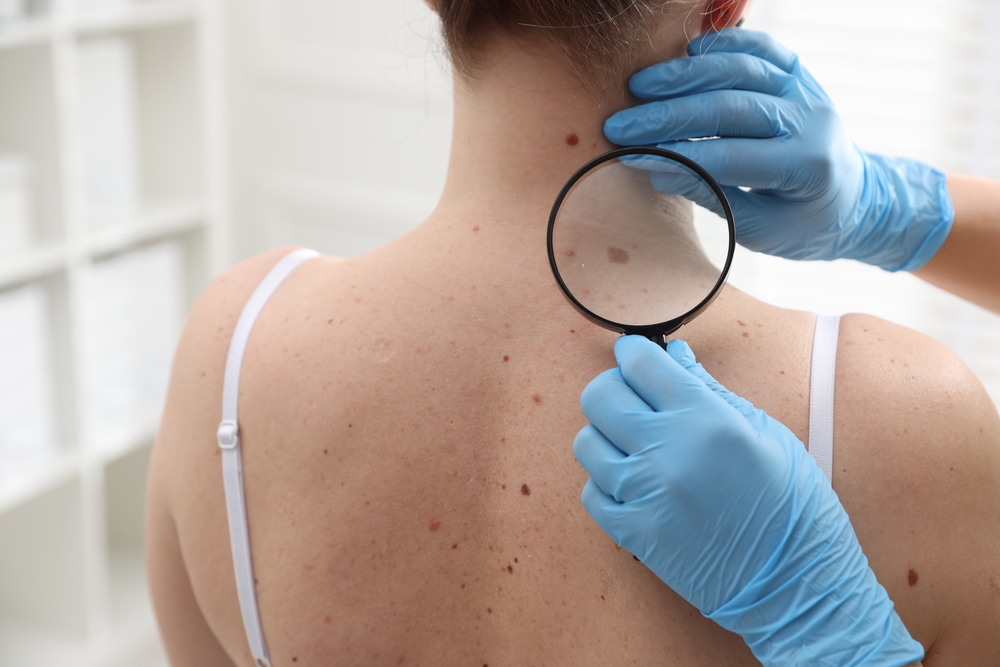
Many patients are surprised by how quick and comfortable a professional skin examination can be.
During your visit, your dermatologist will:
- Review your medical and family history
- Examine your skin from head to toe
- Evaluate any areas of concern
- Compare suspicious lesions with surrounding skin
- Determine whether additional monitoring or a biopsy is recommended
If a biopsy is needed, it is typically performed in the office using local anesthesia.
 How to Perform a Monthly Skin Self-Exam
A monthly self-exam only takes a few minutes and can help you detect changes early.
Using a full-length mirror and a hand mirror:
- Examine your face, scalp, ears, and neck.
- Check your chest, abdomen, back, and sides.
- Look under your arms.
Inspect both arms and hands. - Examine your legs, feet, soles, and between your toes.
- Don’t forget your buttocks and genital area.
Taking photographs of larger moles can make it easier to notice subtle changes over time.
Trust Your Skin to Mittal Dermatology
Your skin tells a story, and sometimes even small changes deserve professional attention. At Mittal Dermatology, we provide comprehensive skin cancer screenings, evaluation of suspicious moles, biopsies, and personalized treatment plans designed to protect your long-term health.
Whether you’re concerned about a single mole or it’s time for your annual skin examination, our experienced team is here to help you feel confident about your skin.
Schedule your skin cancer screening with Mittal Dermatology today and take an important step toward early detection and lifelong skin health.
At a Glance
Dr. Amit Mittal
- Medical degree from Yale School of Medicine
- Board-certified dermatologist
- Founder and director of Mittal Dermatology
- Learn more