
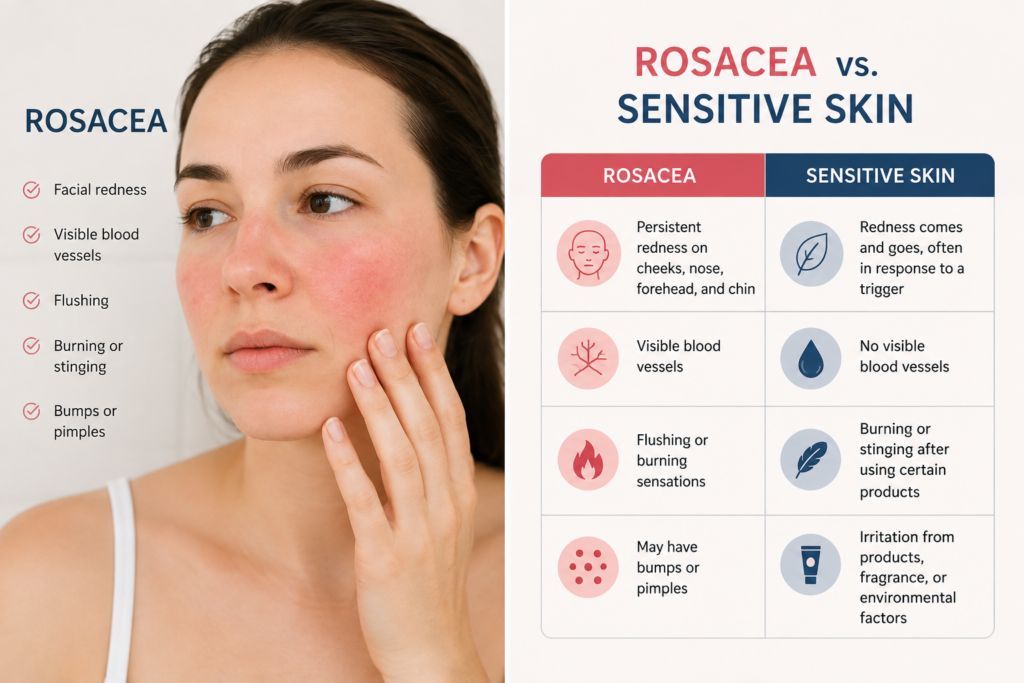
Rosacea or Sensitive Skin? How to Tell the Difference
Common Minnesota Rosacea Triggers
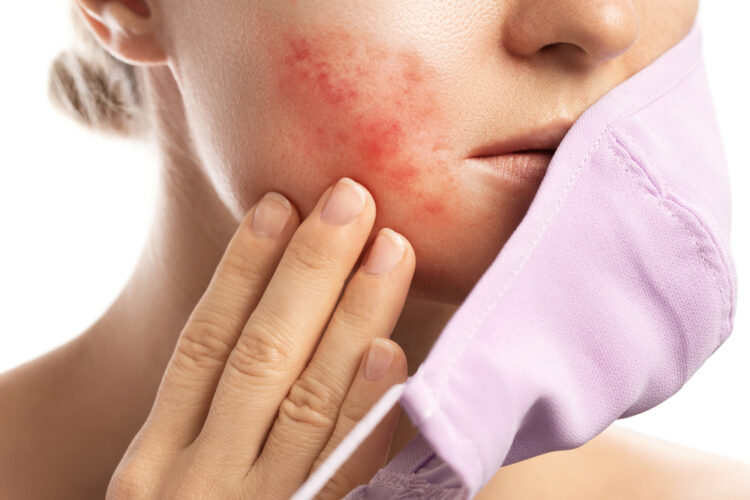 Rosacea flare-ups can be triggered by a variety of environmental and lifestyle factors. Common triggers may include:
- Sun exposure
- Hot or cold weather
- Wind
- Exercise
- Stress
- Hot beverages
- Spicy foods
- Alcohol
- Certain skin care products
According to the American Academy of Dermatology’s guidance on rosacea triggers, identifying your individual triggers can be an important part of reducing flare-ups. Triggers aren’t the same for everyone. Keeping track of when your symptoms appear can help you and your dermatologist identify patterns.
Sun exposure is particularly important. Protecting your skin with broad-spectrum sunscreen and other sun-protective measures can be an important part of managing rosacea-prone skin.
Can You Have Rosacea and Sensitive Skin?
Yes. People with rosacea frequently find that their skin is sensitive to certain ingredients and products. This can make choosing cleansers, moisturizers, sunscreen, cosmetics, and anti-aging products more challenging.
Using too many products in an attempt to treat the redness can sometimes make irritation worse.
A simpler skin care routine may be appropriate. Gentle cleansing, regular moisturizing, sun protection, and carefully selected products can help reduce unnecessary irritation while your dermatologist addresses the underlying condition.
Is It Rosacea, Acne, or Something Else?
Rosacea can sometimes resemble acne because both conditions may cause red bumps and pustules.
There are important differences, however.
Acne commonly involves blackheads, whiteheads, clogged pores, and breakouts that may occur on the face, chest, shoulders, or back. Rosacea generally affects the central face and may occur along with persistent redness, flushing, or visible blood vessels.
Other conditions can cause facial redness and irritation as well, including eczema, contact dermatitis, and allergic reactions.
That’s why repeatedly treating facial redness yourself without knowing the cause may not produce the results you’re hoping for.
How Is Rosacea Treated?
There isn’t one treatment that’s appropriate for every patient. A dermatologist can evaluate the type and severity of your symptoms and develop an individualized treatment plan.
Treatment varies depending on the symptoms involved. The Mayo Clinic’s rosacea treatment overview explains that treatment may include topical or oral medications, laser treatment, gentle skin care, sun protection, and avoiding known triggers.
Depending on your symptoms, rosacea treatment may include:
- Prescription topical medications
- Oral medications
- Changes to your skin care routine
- Trigger identification and avoidance
- Daily sun protection
- Treatments targeting persistent redness or visible blood vessels
Treatment is often focused on controlling symptoms, reducing flare-ups, and helping maintain clearer, more comfortable skin over time.
The AAD’s rosacea skin care recommendations also emphasize gentle cleansing, moisturizing, avoiding irritating ingredients, and using broad-spectrum SPF 30 or higher.
When Should You See a Dermatologist?
Occasional irritation from a new skin care product doesn’t necessarily mean you have rosacea.
However, consider seeing a dermatologist if you experience recurrent or persistent facial redness, frequent flushing, visible blood vessels, unexplained burning or stinging, or acne-like breakouts that aren’t responding to typical acne treatments.
You should also seek professional evaluation if your symptoms are affecting your eyes or eyelids.
A dermatologist can determine whether you’re dealing with rosacea, sensitive skin, or another condition with similar symptoms.
Looking for a Rosacea Dermatologist Near Crystal, Maple Grove, Orono, Osseo, or Plymouth, MN?
Persistent facial redness isn’t always simply sensitive skin.
If your redness repeatedly returns, worsens with certain triggers, or is accompanied by visible blood vessels or acne-like bumps, rosacea could be responsible.
Mittal Dermatology provides dermatologic care for patients in Crystal, Maple Grove, Orono, Osseo, Plymouth, and nearby Minnesota communities experiencing rosacea, sensitive skin, persistent facial redness, and other skin concerns.
If you’re concerned about recurring redness or irritation, contact Mittal Dermatology to schedule an evaluation and find out what may be causing your symptoms.
At a Glance
Dr. Amit Mittal
- Medical degree from Yale School of Medicine
- Board-certified dermatologist
- Founder and director of Mittal Dermatology
- Learn more